
Tartar On Dog’s Teeth: What It Looks Like and How It Can Be Removed

A quick glance inside your dog’s mouth can reveal more than you expect. That yellow or brown coating clinging to the teeth is tartar on dog’s teeth, and it signals that dental disease may already be in motion. Tartar forms when soft plaque hardens and bonds to the tooth surface, creating a rough layer that traps bacteria. This buildup affects appearance, breath odor, and long-term oral health and can only be removed through a professional teeth cleaning by your veterinarian. Many pet owners first notice it while playing with their dog or during a routine yawn. Learning what tartar on a dog’s teeth looks like and how veterinary teams address it helps you take action early and protect your dog’s comfort.
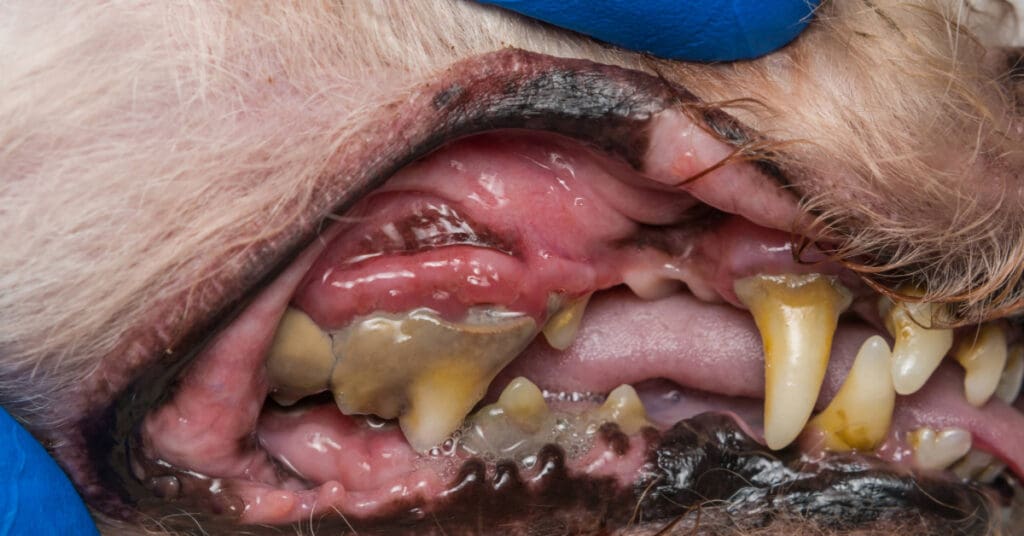
What Is Tartar on Dog’s Teeth?
Tartar on dog’s teeth, also called dental calculus, develops when plaque remains on the teeth long enough to mineralize. Plaque starts as a sticky film made of bacteria, food particles, and saliva proteins. Within days, minerals in saliva harden this film into a tough substance that brushing alone cannot remove once it sets. This hardened layer adheres strongly to enamel and often collects along the gumline. The rough surface of tartar creates an ideal environment for additional bacteria to gather and multiply. Over time, this process leads to gum inflammation, infection, and damage to the structures that support each tooth.
Dental tartar does not form overnight, but it can build quickly without professional care. Dogs of all sizes and breeds develop tartar on dog’s teeth, although small breeds often experience faster accumulation due to crowded teeth. Age also plays a role, as older dogs typically show more visible buildup. Diet texture, chewing habits, and individual saliva chemistry influence how rapidly tartar forms. Because tartar harbors bacteria, it contributes to periodontal disease, a progressive condition that affects the gums and bone. Early identification allows your veterinary team to intervene before more serious complications develop.
What Does Tartar on Dog’s Teeth Look Like?
Pet owners often describe tartar on dog’s teeth as a crusty or cement-like layer. It usually appears yellow at first, then darkens to brown or even gray as it thickens. This buildup often starts near the gumline and spreads upward over the tooth surface. Teeth that once looked smooth and white begin to appear dull and uneven. The gum tissue surrounding affected teeth may look red, swollen, or irritated. Persistent bad breath frequently accompanies visible tartar, signaling bacterial activity beneath the surface.
You might also notice changes in how your dog uses their mouth. Dogs with significant tartar on dog’s teeth sometimes chew on one side or drop food while eating. Some become reluctant to play with toys they previously enjoyed. Drooling may increase, and you could see traces of blood on chew items. In advanced cases, gums can recede, exposing tooth roots and creating discomfort. These visible and behavioral clues highlight why regular oral checks matter.
Early Visual Signs
In the beginning stages, tartar may look like a thin line along the gum edge. The discoloration can be subtle, especially on back teeth. Pet owners often miss this stage because dogs rarely show obvious discomfort. Despite the mild appearance, bacteria already affect the gum tissue. Catching tartar on your dog’s teeth early helps reduce the risk of deeper infection. Routine veterinary exams play an important role in spotting these subtle changes.
Advanced Buildup
As tartar thickens, it can cover large portions of the tooth. The surface feels rough and uneven when viewed closely. Gums may pull away from the teeth, forming pockets where bacteria thrive. Teeth can loosen as supporting structures weaken. At this point, dogs may experience significant oral pain even if they hide it well. Veterinary intervention becomes urgent to address infection and preserve remaining teeth.
How Do Veterinarians Remove Tartar on Dog’s Teeth?
Professional dental cleaning remains the primary way veterinarians remove tartar on dog’s teeth. During this procedure, your veterinary team uses specialized instruments to scale hardened deposits from above and below the gumline. This process eliminates bacteria-laden tartar that home care cannot reach. The teeth are then polished to smooth the enamel surface, making it more difficult for plaque to stick. Dental X-rays often accompany the cleaning to evaluate the roots and bone beneath the gums. These images help identify hidden diseases that may not appear during a visual exam.
Veterinary dental procedures focus on both treatment and prevention of further damage. Removing tartar reduces inflammation and helps gums reattach more closely to the teeth. Addressing infection early lowers the risk of bacteria entering the bloodstream and affecting organs. Every step aims to restore oral comfort and function. Your veterinary team also evaluates each tooth’s stability and overall gum health. This thorough approach supports long-term dental wellness.
Why Professional Care Matters
Tartar bonds tightly to enamel, so surface scraping at home cannot safely remove it. Attempting to chip it off can injure the tooth or gums. Professional tools allow precise removal without damaging surrounding tissue. Your veterinarian also works below the gumline, where most periodontal disease occurs. Without this deep cleaning, bacteria remain active and continue causing harm. Regular professional dental care forms the foundation of effective tartar control.
Why Tartar on Dog’s Teeth Is More Than a Cosmetic Issue
Many people focus on how tartar looks, but the impact goes far beyond appearance. Bacteria living in tartar trigger chronic inflammation in the gums. This inflammation damages connective tissue and bone that anchor teeth in place. As periodontal disease advances, teeth may loosen or fall out. Infections in the mouth can also spread through the bloodstream. These bacteria can affect the heart, liver, and kidneys over time.
Oral pain changes a dog’s daily life. Dogs with untreated tartar on dog’s teeth may eat less or avoid hard foods. Some become less playful or withdraw from interaction. Because dogs hide discomfort, owners might not realize how much pain dental disease causes. Addressing tartar improves quality of life and supports overall health. Oral care remains an important part of preventive veterinary medicine.
Is There a Way to Prevent Tartar Buildup on My Dog’s Teeth?
Prevention strategies focus on slowing plaque accumulation before it hardens:
- Regular dental evaluations allow veterinary professionals to track changes and recommend appropriate care intervals.
- Early cleanings reduce the amount of tartar on dog’s teeth and help maintain healthier gums.
- Consistent monitoring supports long-term dental stability.
- Prevention also involves understanding your dog’s individual risk factors. Age, breed, and oral anatomy influence how frequently professional care may be needed.
Veterinarians also guide pet owners on maintaining oral hygiene between visits. While home care does not replace professional cleanings, it supports overall dental management. Veterinary-approved dental products can help reduce plaque buildup. Your veterinary team can demonstrate safe techniques and tools designed specifically for dogs. This partnership between home care and clinical care offers the best defense against heavy tartar accumulation.
The Role of Routine Exams
Routine wellness exams provide opportunities to assess the mouth alongside the rest of the body. Early detection of tartar on dog’s teeth leads to timely scheduling of dental procedures. Veterinarians can identify gum inflammation, tooth mobility, and other warning signs. Tracking dental health over time helps tailor care to your dog’s needs. These visits also allow pet owners to ask questions about oral changes they notice. Consistent evaluations form the backbone of preventive dental care.
When to Contact Your Veterinarian About Dental Buildup
Pet owners should reach out when they see visible tartar, red gums, or persistent bad breath. Changes in eating habits or chewing behavior also warrant attention. Drooling, pawing at the mouth, or facial swelling signal possible dental pain. Prompt evaluation helps prevent minor issues from escalating. Early action often leads to less extensive treatment. Dental concerns rarely resolve on their own.
If you live in Indianapolis, the team at Broad Ripple Animal Clinic provides professional dental evaluations and cleanings for dogs of all ages. Our staff assesses tartar on dog’s teeth and develops a care plan tailored to each patient. Addressing dental health supports your dog’s comfort and long-term wellness. Call us at (317) 257-5334 to schedule an appointment and discuss any oral health concerns. Dogs in Indianapolis benefit from consistent veterinary dental care that focuses on prevention, early detection, and thorough treatment.
Recent Posts
About Us
Your pet is unique, unconditionally loving, and a valued part of your family, and Broad Ripple Animal Clinic recognizes the incredible bond you share. You can rely on our veterinarians and staff in Indianapolis, IN to be here for you, and be deeply committed to providing the highest level of care each time you visit. This includes giving you a central voice in the care of your pet and making you an integral part of the decision-making process.
Our AAHA-accredited animal hospital delivers a full spectrum of services, advanced technology, comprehensive pain management, and regenerative therapies to promote better healing.